
You reach for the pull-through gadget sitting in your drawer. Your knife feels sharper after. For about a week. Then you’re back where you started, wondering why a $200 Wüsthof keeps disappointing you.
Is a pull-through sharpener actually sharpening my knife?
TL;DR: It’s removing metal, but not the right way. Pull-through gadgets use fixed angles that rarely match your knife’s bevel, and they grind off far more metal than necessary. For a quality knife, that adds up to permanent, cumulative damage.
Here’s what’s actually happening inside that little plastic box.
The Angle Problem
The most important variable in sharpening is the bevel angle. Every knife has a factory-ground edge angle that the manufacturer matched to the steel’s hardness and the knife’s intended job. Wüsthof grinds most of their blades at around 14 degrees per side. Shun and other Japanese brands typically sit closer to 15 to 16 degrees per side. These aren’t interchangeable. A knife’s geometry is the foundation of how it cuts.
Pull-through sharpeners don’t know or care about any of that. Most are fixed at a single angle, often 20 degrees, and every knife goes through the same slot. Slide a Japanese knife through enough times and you’ve slowly rebuilt its edge at the wrong angle. The cut feels different. The blade loses that effortless slicing quality it had when new. That’s not a dull knife. That’s a re-profiled knife.
The problem compounds with knives that have a bolster, or blades that curve toward the tip. A pull-through can’t adapt to either. The pressure you apply isn’t consistent from heel to tip, so the edge distorts unevenly along its length, losing the original blade profile over time.
Single-bevel Japanese knives like a yanagiba are another story entirely. Putting one through a pull-through will permanently ruin the geometry. These knives have an asymmetric edge that has to be sharpened in a specific way. A carbide slot doesn’t know the difference.
The Metal Problem
Pull-through sharpeners remove metal aggressively. The carbide wheels or ceramic rods inside work by tearing off steel from both sides of the blade simultaneously. It’s fast, and there’s something satisfying about it. But the tradeoff is severe.
Electric pull-through sharpeners remove far too much metal and shorten the life of your knife by years. A professional whetstone sharpening removes only what’s needed. The sharpener works one side at a time, feels for the burr, stops at the apex. There’s no wasted steel.
Think about what that means over the life of a knife. Every pass through a pull-through takes a little more off than necessary. After a few years, you’ve lost significant blade height. The knife is shorter, thinner near the heel, and the taper from spine to edge has changed. A knife that cost $200 or $300 deserves better than that.
What a Professional Sharpener Actually Does
A professional starts by reading the knife. That means finding the angle it was designed to hold and working back toward it, not imposing a generic angle from a fixed slot.
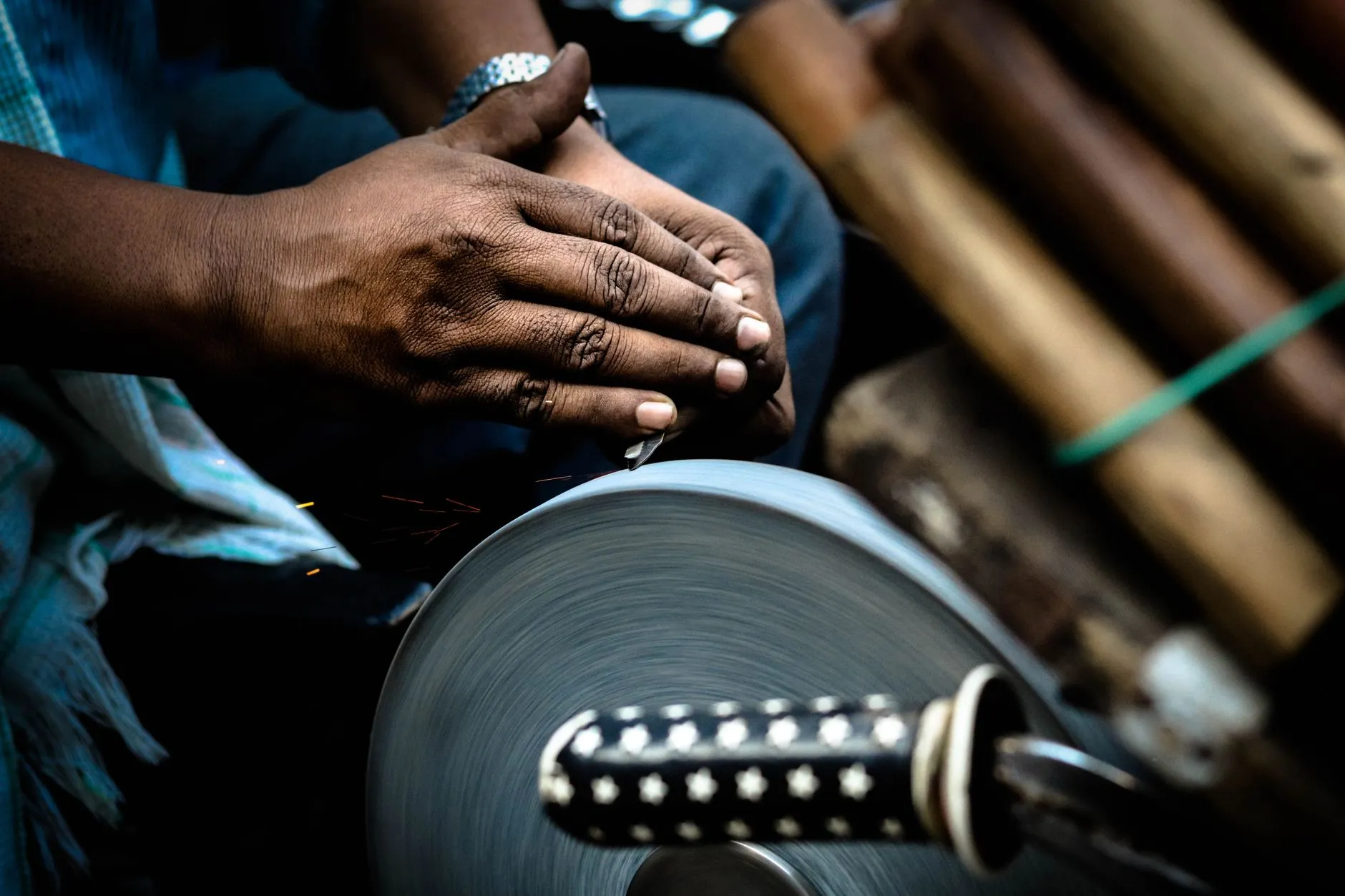
On a whetstone, the sharpener works one side of the blade at a time. They control how much metal comes off and where. For a Wüsthof, that means respecting the factory bevel and finishing through progressively finer grits to produce a clean, stable edge. For a Shun or Miyabi with harder, more brittle steel, it means a thinner edge and a strop finish that polishes the apex without weakening it. For a Zwilling that has been through a pull-through for years, it sometimes means re-profiling first, before any real sharpening can happen.
Hard steel that can handle a low angle needs to be sharpened at that low angle. Soft steel that needs more support behind the apex needs a wider angle. A pull-through applies the same treatment to both. A professional applies the right one.
The Bottom Line
A pull-through sharpener will make your knife feel sharper today. It will also change your knife’s geometry a little each time, and that drift is cumulative.
The better approach: hone regularly with a honing rod between cooks to keep the edge aligned, and bring the knife to a professional when it needs metal removed. For most home cooks, that is once or twice a year.
Done that way, a good knife can stay in excellent shape for decades. Done with a pull-through, it’s a slow countdown.
If you’re in Midtown Toronto and your knives are due, Slicey offers same-day sharpening. Drop them off. Pick them up the way they were meant to feel.