
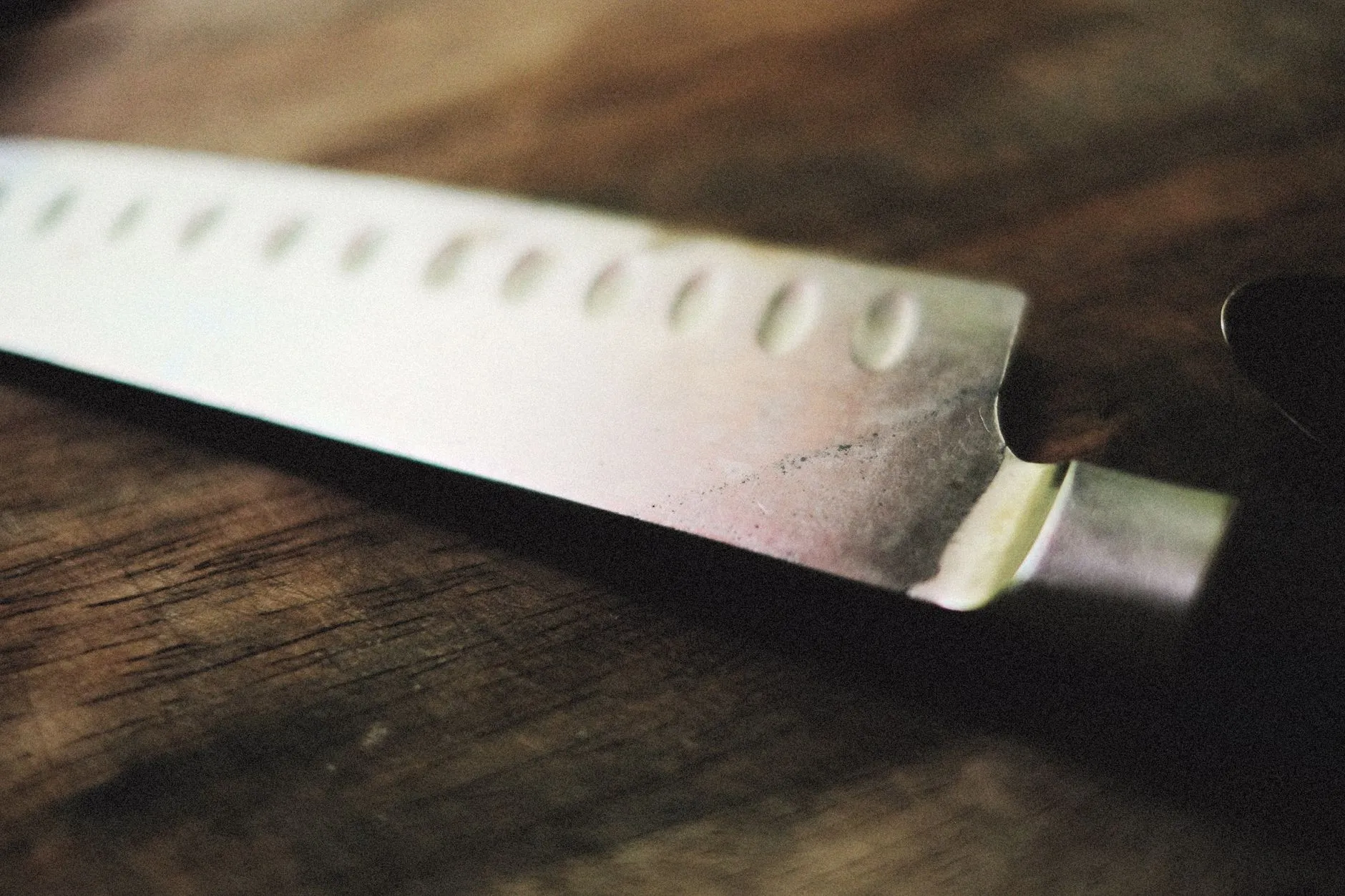
You used to hone it every few days and it snapped back to attention. Now you hone it the same way and it barely helps. Nothing about your routine has changed, so what gives?
Why does my Wüsthof feel duller even though I hone it regularly?
TL;DR: Honing only realigns a rolled edge, it doesn’t remove metal. Years of sharpening have likely made the area just behind your edge thicker, so the blade now has to wedge its way through food instead of slicing cleanly. The fix isn’t more honing. It’s thinning.
Honing fixes a different problem than the one you have
A honing rod doesn’t sharpen anything. It straightens a microscopic roll in the edge, the kind that happens when steel meets a cutting board hundreds of times. That’s a real and useful job. It’s just not the job your knife needs right now.
Once the edge has actually worn down rather than just rolled over, honing has nothing left to straighten. You’re polishing a problem that isn’t there while the real one sits an inch behind it.
The edge is climbing into thicker steel
Every time a knife gets sharpened, a tiny bit of metal comes off right at the apex. Do that often enough over a few years and the cutting edge isn’t sitting where it used to. It’s crept backward into a part of the blade that was never meant to be the edge, and that part is thicker.
That extra thickness is there on purpose. Steel directly behind the edge gives the blade strength and prevents it from feeling flimsy. But once your actual cutting edge has migrated into that zone, the knife has to shove that wider wedge of metal through whatever you’re cutting. You can feel it most in dense vegetables: a carrot or a squash that should split cleanly instead splits with a faint crunch and a push, like the knife is working harder than it should.
This effect is well known among people who sharpen knives seriously. It’s usually called thinning behind the edge, and the name describes exactly what’s gone wrong: the steel behind the edge has gotten too wide, so the edge needs to be made thin again, not just sharp (Sharp Pebble).
A Wüsthof has its own version of this problem
Wüsthof’s modern Precision Edge Technology grinds most of their kitchen knives to a 14 degree bevel per side, noticeably narrower than the roughly 20 degrees that used to be standard (Wüsthof). Older Wüsthof lines, including ones still sitting in plenty of Lawrence Park kitchens, were ground at that wider angle.
Either way, the angle at the factory only describes a brand new edge. As that edge gets sharpened down over years, it isn’t just the angle that matters anymore, it’s how much steel is sitting behind it. A Wüsthof that’s had a decade of touch ups can end up thick behind the edge regardless of what angle it started at (Vivront).
This is also exactly why honing feels less effective over time on a German blade specifically. Wüsthof’s softer stainless steel is built to roll rather than chip, which is why honing works so well on it early on. But honing was never going to fix a knife that’s gotten thick behind the edge. Only removing metal does that.
So how do you actually fix it?
Thinning means grinding back the shoulders of the blade just behind the edge, not just touching up the edge itself. It’s more involved than a routine sharpen and it’s easy to overdo by hand, since you’re reshaping a wider stretch of the blade rather than a thin line at the very tip.
This is the point where most home cooks are better off handing the knife to someone who does it for a living. Get it wrong and you can take off more steel than you meant to, or throw off the symmetry of the bevel. Get it right and the knife goes back to cutting the way it did when it was new, not just sharp again but actually thin again.
The takeaway
If honing has stopped working and your knife is wedging in dense vegetables, the edge probably hasn’t dulled. It’s moved. That’s not a flaw in your knife or your routine, it’s just what happens to any blade after enough sharpenings. At Slicey, thinning behind the edge is part of how we bring an older Wüsthof back to the way it cut on day one, done by hand, on water cooled stones, so the steel never sees more heat than it can handle.